 Flexi Educational Consult
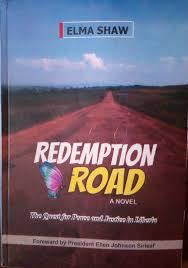
Redemption Road is a Liberian prose work about the psychological and social consequences of civil war. Set mainly in Monrovia during the administration of former Liberian president Charles Taylor, the novel follows Bendu Lewis, a survivor of wartime violence who works to help other victims while struggling with memories and guilt from her own past. Through Bendu and other survivors, Elma Shaw examines trauma, justice, forgiveness, corruption, resilience, reconciliation and the difficult process of rebuilding a nation after conflict. The work presents redemption as a demanding journey that requires truth, courage, accountability and personal healing. Bendu's decision to confront Commander Cobra, the warlord who once held her captive, brings her into conflict with a corrupt justice system and forces her to face a painful secret concerning a child she bore during the war.
The narrative opens around the memorial service for Bendu Lewis's grandmother, Granny, whose death recalls the losses suffered during Liberia's civil war. Bendu is a counsellor and co-director of Peace in Practice, an organisation that assists traumatised war survivors. Although she helps others, she continues to suffer from nightmares and the psychological effects of her own captivity and abuse. Her troubled past becomes urgent when Moses Varney, also known as Commander Cobra, a former rebel commander responsible for atrocities, reappears in Monrovia. Bendu decides to pursue justice for his victims and to confront the man connected with her own suffering. With the help of Agnes, journalist Calvin Daniels and other allies, she seeks evidence and attempts to use the legal system against Cobra. However, corruption, political influence and the manipulation of the courts obstruct justice; Judge Solomon Dagoseh is presented as a particularly corrupt figure. Bendu's investigation also exposes the continuing effects of war on survivors such as Tenneh and reveals the difficult relationship between justice and forgiveness. In the course of confronting Cobra, Bendu must acknowledge her own wartime secret: the child she bore for a rebel and later abandoned. Her healing begins when she faces the truth, accepts responsibility and moves towards self-forgiveness. The novel ultimately suggests that Liberia's recovery depends on truth, justice, reconciliation and the resilience of ordinary people, especially women, who continue to rebuild their lives and country.